A dumpster rental agreement is the written contract that sets the rental period, the weight limit, what cannot go in the bin, and who is liable for placement and overages. This template is built for a roll-off operator who needs an agreement to issue on every drop, not for a customer reading about their rights. The weight limit is the clause that protects your margin the hardest, because disposal is billed by the ton. The average U.S. landfill tipping fee hit $62.28 per ton in 2024, up about 10 percent in a single year, so an uncapped bin is an uncapped cost coming straight out of your pocket. Below is every clause your agreement needs, a breakdown of what each term protects, and the disposal math that explains why the weight and prohibited-items clauses are not optional, so you can build a real agreement with your attorney instead of copying a stranger’s PDF.
- A dumpster rental agreement is where a roll-off business either protects its margin or gives it away. The bin gets filled with a transmission and two paint cans, parked on a soft driveway, and kept three extra days. Every one of those is a clause.
- The terms that decide disputes: the weight cap and overage rate, the prohibited-items list, the placement and property-damage liability, the extra-day fee, and the overfill clause.
- Disposal is billed by the ton, so the weight cap is a margin control, not a formality. The national average tipping fee is now over $62 a ton.
- This is an operator education resource, not legal advice. Adapt the template, then have a local attorney review it once before you issue it.
What should a dumpster rental agreement include?
A dumpster rental agreement should include the parties, the equipment and size, the rental period with delivery and pickup dates, the pricing with included tonnage, the overage rate, the prohibited items, the placement and property-damage liability, the access requirements, the payment and deposit terms, the relocation fee, and signatures. The clause structure below is what a roll-off operator can adapt. Have a local attorney review it once before you put it in front of a customer:
| Clause | What it states |
|---|---|
| Parties | Your legal business name and the customer’s name and contact |
| Equipment and size | The bin size in cubic yards and the unit identifier |
| Rental period | The delivery date, the included days, and the scheduled pickup date |
| Pricing and included tonnage | The base rate and how many tons are included |
| Overage rate | The per-ton charge for weight over the included tonnage |
| Prohibited items | Hazardous waste, tires, appliances, paint, batteries, and anything else you will not haul |
| Placement and liability | Where the bin goes and who is responsible for surface or property damage |
| Access requirements | Clearance, overhead obstructions, and a path the truck can reach |
| Payment and deposit | Amount due, deposit, accepted methods, and refund terms |
| Relocation fee | The charge if the customer needs the bin moved after delivery |
| Signatures | Both parties sign and date the agreement |
Every clause is there because a roll-off operator somewhere ate a cost the clause would have caught. The five that protect the most margin are next.
Which clauses actually protect a dumpster business?
The clauses that protect a dumpster business are the weight cap and overage rate, the prohibited-items list, the placement and property-damage liability, the extra-day fee, and the overfill clause. Each one closes off a specific way the job loses money:
- Weight cap and overage rate. The clause that protects your margin, covered in full below. State the included tonnage and the per-ton charge above it, because the landfill bills you by weight whether or not you billed the customer.
- Prohibited items. The list that keeps a load haulable. A bin with a refrigerant appliance, a stack of tires, or paint cans can be rejected at the landfill or hit with a special-handling fee, and the clause is what makes that the customer’s problem, not yours.
- Placement and property-damage liability. The driveway-crack clause. State where the bin goes, that the customer approved the placement, and that protection boards do not transfer liability for a surface the customer represented as sound. This is the dispute that turns into a repair bill without a clause.
- Extra-day fee. A stated per-day charge after the included rental period. Without it, the bin you need for the next job is sitting full on someone’s driveway and you have no contractual basis to charge for the delay.
- Overfill clause. A bin filled above the rim cannot be legally or safely hauled. The clause states that an overfilled bin must be brought to level before pickup, or the customer pays for the return trip. It is the term that prevents the “I filled it, why won’t you take it?” argument.
Why does the weight limit matter so much?
The weight limit matters because disposal is billed by the ton, so every ton over the included weight is a cost you pay at the landfill whether or not you charged the customer for it. The Environmental Research and Education Foundation reported the average U.S. landfill tipping fee reached $62.28 per ton in 2024, about a 10 percent jump in one year, and the Northeast averages over $80 a ton. That is the number an uncapped bin exposes you to. Here is the math:
Say your 20-yard bin includes 2 tons. A customer fills it with 3.5 tons of roofing shingles, which is dense, heavy debris. That is 1.5 tons over, and at a $62-per-ton tipping fee you just paid about $93 in disposal you did not bill for, on top of the fuel and the slot. With a weight cap and an overage rate in the agreement, that $93 becomes a line item the customer owes, not a hole in your margin. The rate-card side of this lives in our dumpster rental pricing guide, and the full breakdown of what these jobs cost to run is in our dumpster rental cost guide. The bin size that sets your included tonnage is covered in the dumpster sizes guide.
What can’t go in a rented dumpster?
Hazardous household waste cannot go in a rented dumpster, which the EPA defines as leftover products that can catch fire, react, or are corrosive or toxic, and it specifically names paints, cleaners, oils, batteries, and pesticides as items that require special disposal. Beyond those, most operators also prohibit tires, appliances containing refrigerant, wet paint, propane tanks, and large quantities of concrete or dirt, because each one either violates landfill rules or carries a special-handling charge that wrecks the economics of the haul. The prohibited-items clause does two jobs: it keeps your load acceptable at the transfer station, and it shifts the cost of a contaminated load back to the customer who put the banned material in. Operators who also run junk removal deal with the same disposal rules on the hauling side, so the prohibited list is worth keeping consistent across both services.
What to do next
Adapt the agreement to your business, have a local attorney review it once, and issue it on every drop, because a handshake does not survive a cracked driveway or an overweight load. Put the weight cap and overage rate in writing, name the prohibited items, and get the placement approved before the bin comes off the truck.
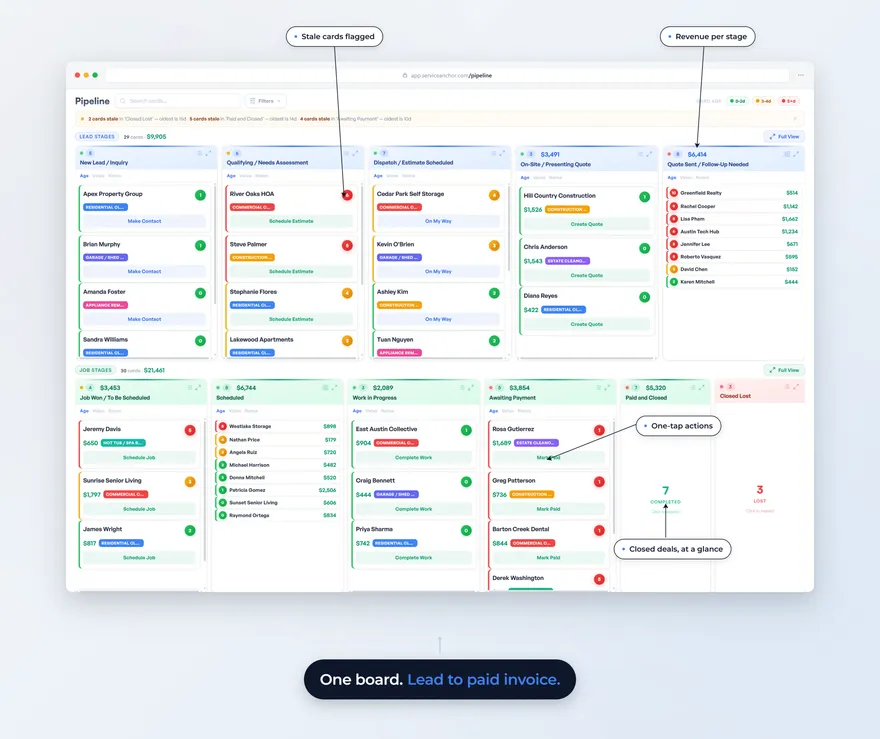
The part Service Anchor handles is keeping the job on track after the agreement is signed. We carry a dumpster-rental price book so your bin sizes, included tonnage, and overage rates are priced consistently on every quote, and the job runs through the pipeline so the drop-off and the pickup both stay on the schedule instead of one getting forgotten. The software that schedules the drop-off and pickup is that same board. It is $29 a month for founding members, built for dumpster rental operators.
FAQ
Is a dumpster rental agreement legally binding?
A dumpster rental agreement is legally binding when both parties sign it, it states the essential terms (the equipment, the price, the rental period, and the responsibilities), and its terms are lawful in your state. The prohibited-items and liability clauses are enforceable as long as they were disclosed and agreed to before delivery. Because contract requirements vary by state, have a local attorney review your agreement once before you rely on it.
What happens if I go over the weight limit on a dumpster?
If you go over the weight limit, the operator is charged extra by the landfill, which is billed by the ton, and that overage gets passed to you at the per-ton rate in your agreement. A weight cap exists because heavy debris like concrete, dirt, and roofing shingles adds tonnage fast, and the operator pays the disposal cost regardless. The agreement’s overage rate is what turns that cost into a clear line item instead of a surprise.
Who is responsible if a dumpster damages my driveway?
Responsibility for driveway damage usually falls to the customer when the agreement states that the customer approved the placement and represented the surface as able to bear the load, even when the operator uses protection boards. Boards reduce the risk but do not transfer liability for a surface that was already compromised. This is exactly why the placement-and-liability clause belongs in the agreement, so both sides know who carries the risk before the bin is set down.
What can’t you put in a rented dumpster?
You cannot put household hazardous waste in a rented dumpster, which the EPA defines to include paints, cleaners, oils, batteries, and pesticides. Most operators also prohibit tires, appliances with refrigerant, propane tanks, wet paint, and large amounts of concrete or dirt, because they violate landfill rules or trigger special-handling fees. The prohibited-items list in the agreement is what makes a contaminated load the customer’s cost, not yours.
Can I keep a dumpster longer than the rental period?
You can usually keep a dumpster past the rental period, but the agreement’s extra-day fee applies for each additional day. The fee exists because that bin is equipment the operator needs back for the next job, so a bin sitting full on your driveway has a real cost. If you know you will need it longer, tell the operator up front so it can be scheduled and priced rather than billed as an overage.
Environmental Research and Education Foundation (EREF), Analyzing Municipal Solid Waste Landfill Tipping Fees: source for the average U.S. landfill tipping fee reaching $62.28 per ton in 2024, a 10 percent increase over the prior year, with the Northeast averaging over $80 per ton. https://erefdn.org/analyzing-municipal-solid-waste-landfill-tipping-fees/
U.S. Environmental Protection Agency, Household Hazardous Waste (HHW): source for the definition of household hazardous waste and the specific examples (paints, cleaners, oils, batteries, and pesticides) that require special disposal rather than the regular trash. https://www.epa.gov/hw/household-hazardous-waste-hhw
Last updated: June 2026. First publication: a dumpster rental agreement template for roll-off operators, with the weight-cap, overage, prohibited-items, placement-liability, and extra-day clauses explained, plus the disposal-economics math behind the weight limit.